9 hr
Mexico City: Teotihuacan, Tlatelolco & Guadalupe Shrine Tour
- Expert local guide
- Small group
- Skip-the-line access
- Free cancellation
Teotihuacan From Mexico City — Pyramids, Murals & the Avenue of the Dead
Ancient stone at sunrise, forty-six centuries of silence
Compare fares, pick the fit — all bookings are mobile-voucher and eligible for free cancellation where shown.
9 hr
8 hr
9 hr
Worth it for nearly every visitor, climb ban included
At 210 MXN general admission, teotihuacan from mexico city is one of the most underpriced archaeological experiences in the Americas. The 2023 climb ban on the Pyramid of the Sun and Pyramid of the Moon disappointed many, but the site's true depth was never about the summit view. The Avenue of the Dead stretches over two kilometres, flanked by temple platforms whose sheer scale reframes your sense of pre-Columbian urbanism. The Tepantitla and Atetelco palace complexes hold some of the best-preserved Mesoamerican murals anywhere — feathered serpents, rain deity figures, processions in vivid pigment — all accessible on foot at ground level. The 83-hectare archaeological zone rewards slow walking, not climbing. Teotihuacan from mexico city tours typically arrive mid-morning; book teotihuacan from mexico city tickets in advance and arrive by 08:00 to read the site on your own terms before the tour groups fill the main plazas.
Bottom line: If ancient urban scale, world-class murals, and 210 MXN admission sound like a fair trade, this Mexico City day trip still earns its reputation without a single step climbed.
Deciding on a trip to teotihuacan from mexico city depends on your style: choose historical ruins or Xochimilco's floating party canals. Most visitors find the Pyramids of the Sun and Moon the more culturally enriching experience. If you prefer a structured itinerary with transport, booking teotihuacan from mexico city tours is highly recommended. A guided excursion takes the hassle out of navigating from the capital.
|
Top pick Teotihuacan |
Xochimilco | |
|---|---|---|
| Vibe and Experience | Historical exploration and vast open ruins | Festive floating canals with music and drinks |
| Main Attraction | Ancient pre-Hispanic pyramids and avenues | Traditional trajineras and chinampa floating gardens |
| Travel Time from CDMX | 1 to 1.5 hours north | 45 to 90 minutes south |
| Pacing and Effort | Moderate to high walking under open sun | Relaxed sitting while drifting along water |
| Approximate Cost | 210 MXN per person admission | 750 MXN hourly boat rental |
| Best Suited For | History lovers and active outdoor walkers | Social groups, families, and party vibes |
| See tickets & prices |
Verdict: We recommend booking a teotihuacan from mexico city tour to explore the Avenue of the Dead with a local guide. This vast archaeological site requires plenty of walking under the hot sun. To guarantee your entry, buy your teotihuacan from mexico city tickets online before arrival. Ultimately, a Teotihuacan day tour from CDMX offers unmatched historical depth, while Xochimilco is best saved for a festive group celebration.
Hand-picked experiences loved by thousands of travelers
3 - 11 hours
Free Cancellation
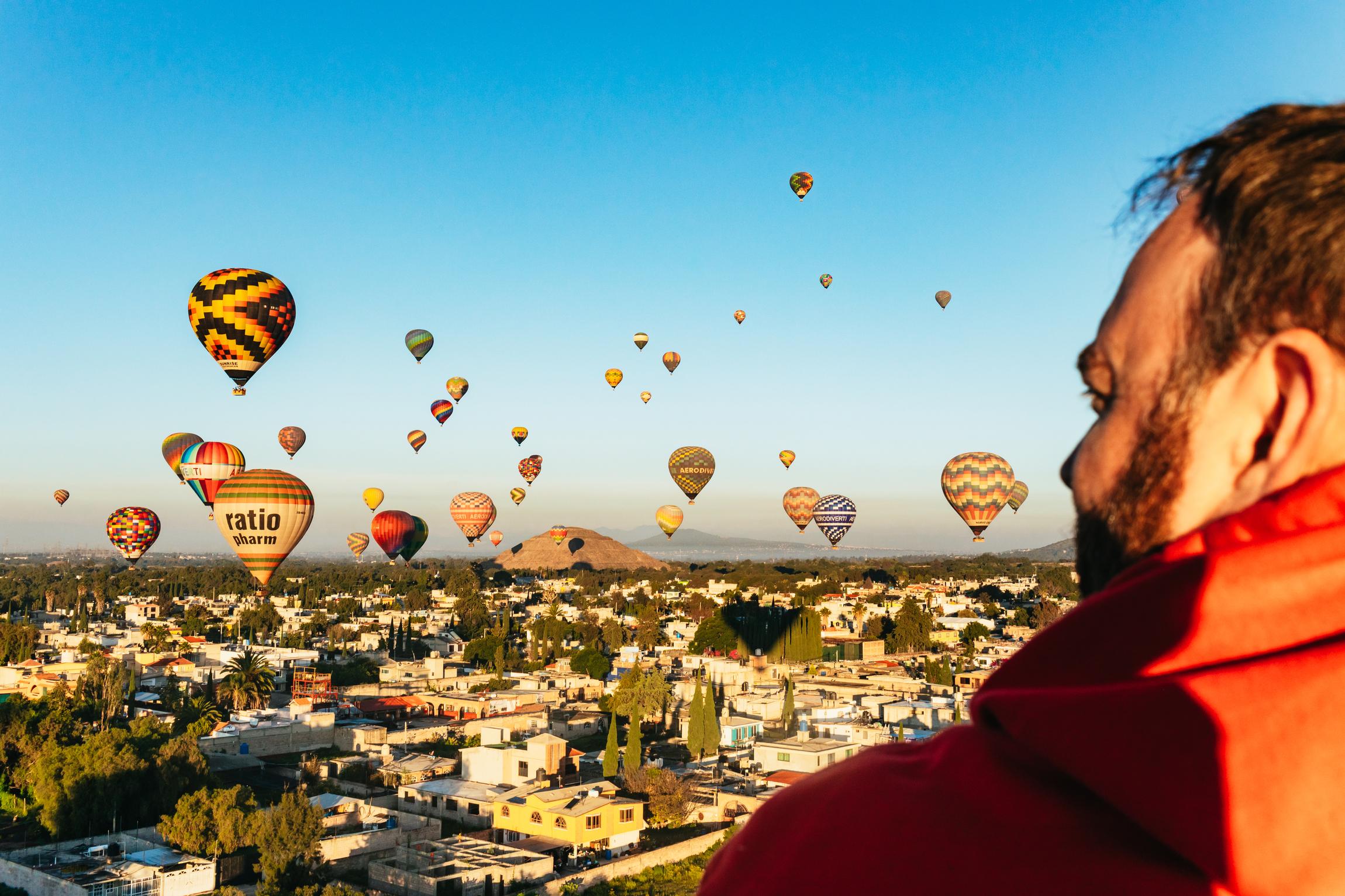
Soar above the ancient pyramids at sunrise and choose from flexible tour packages including guided cultural visits.
9 hours
Free Cancellation
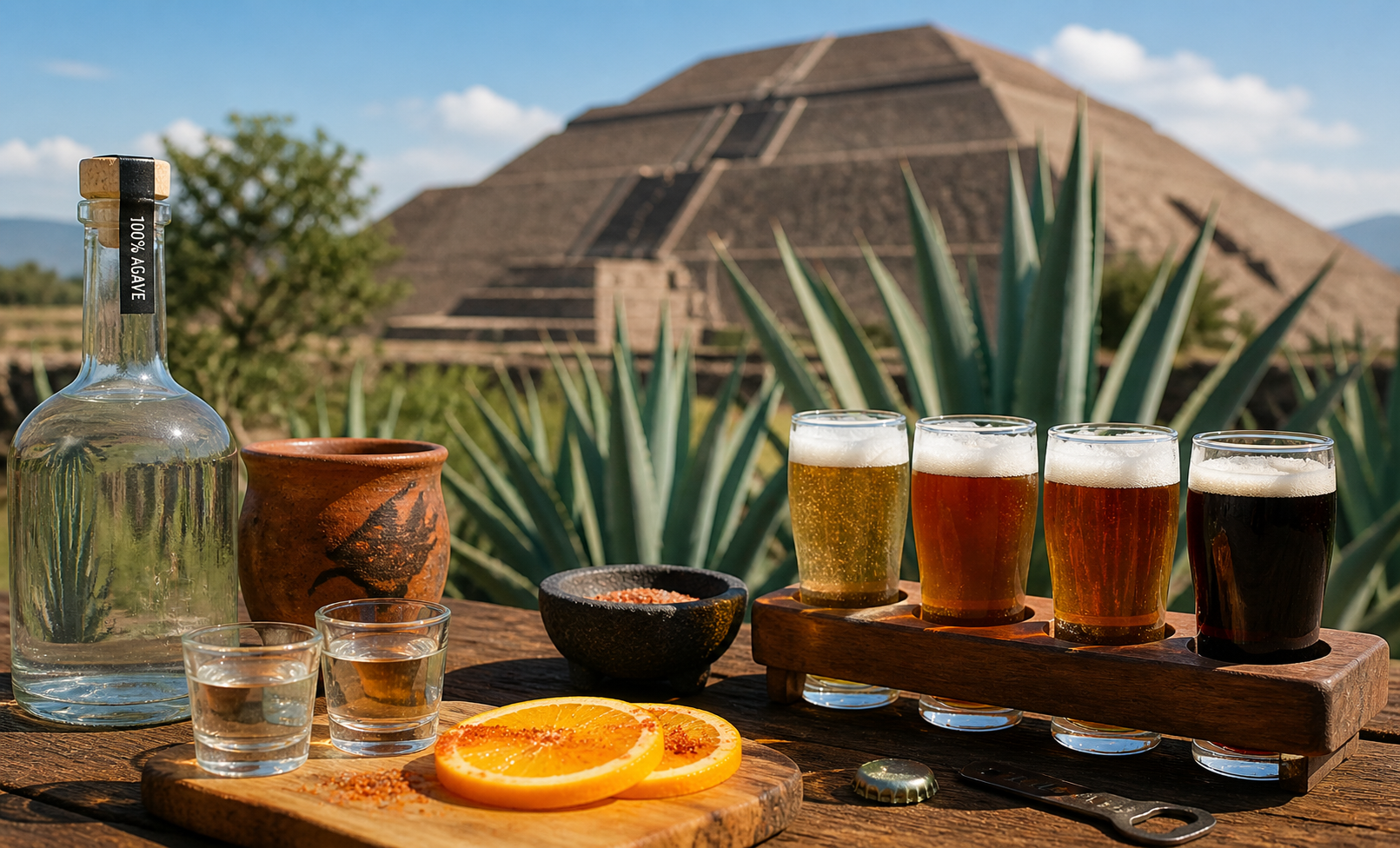
Uncover ancient history and local flavors on this premium day trip featuring pyramids, mezcal tastings, and craft beer.
Self-guided (typical visit 3-4 hours)
Free Cancellation
Bypass the main entrance queues with this priority pass to explore the majestic ancient pyramids of Teotihuacán.
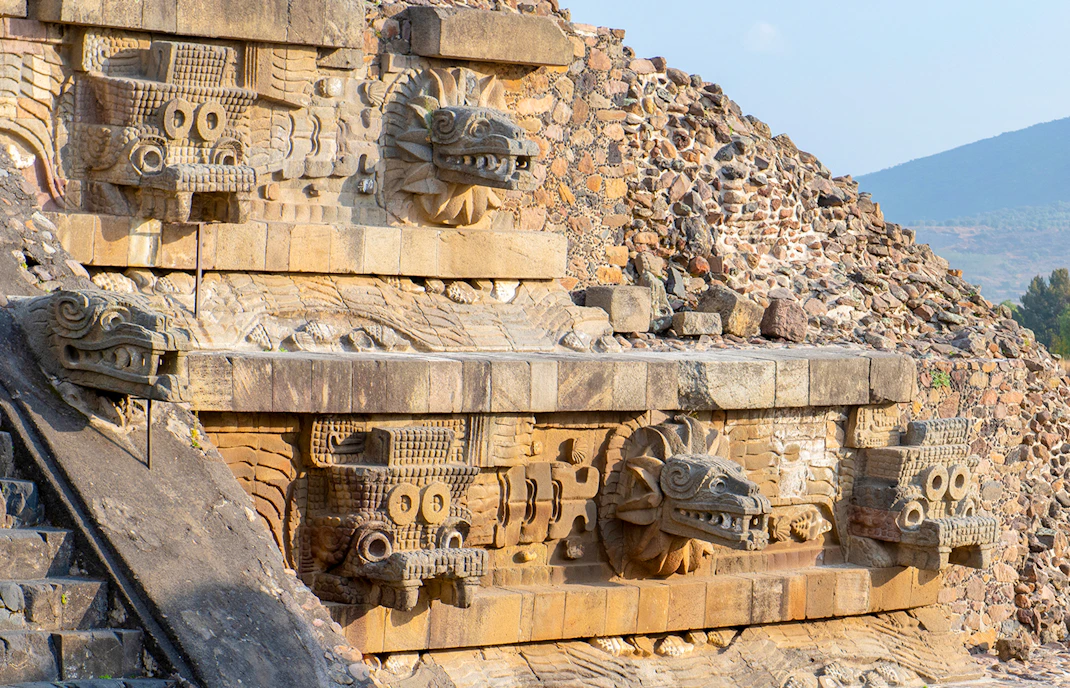
Start your morning at Gate 1, visiting the administrative heart of the pre-Columbian city and viewing the stone carvings of the feathered serpent.
Stroll northward along the main Mesoamerican thoroughfare, observing the ancient ceremonial platforms and residential compounds.
Walk around the base of the massive Pyramid of the Sun to appreciate its architectural scale and stone construction.
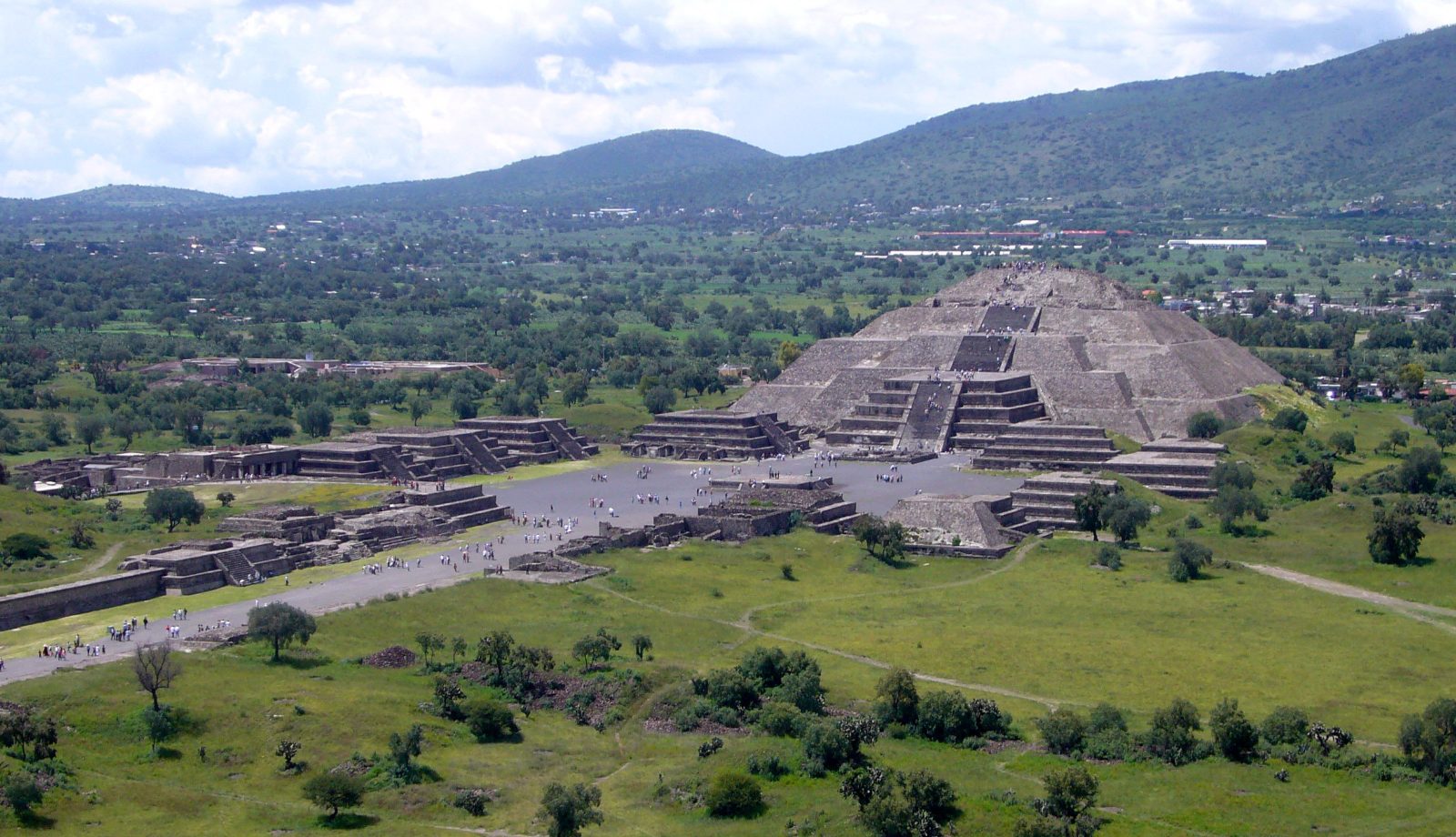
Reach the northern terminus of the avenue to view the plaza and the dramatic backdrop of Cerro Gordo.
Conclude your walk at the Palace of Quetzalpapalotl to see the restored columns, obsidian details, and vibrant murals.
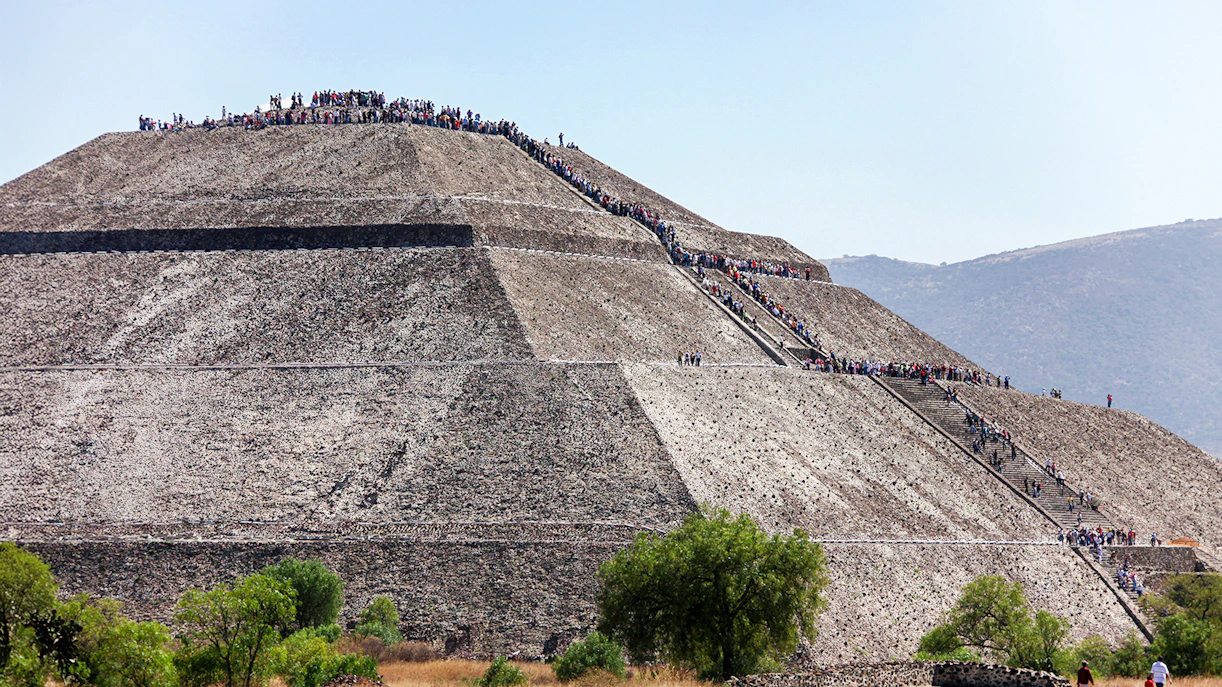
The largest structure in the ancient city, measuring over 220 meters across at its base. It was constructed around 200 CE using millions of tons of local volcanic stone and clay.
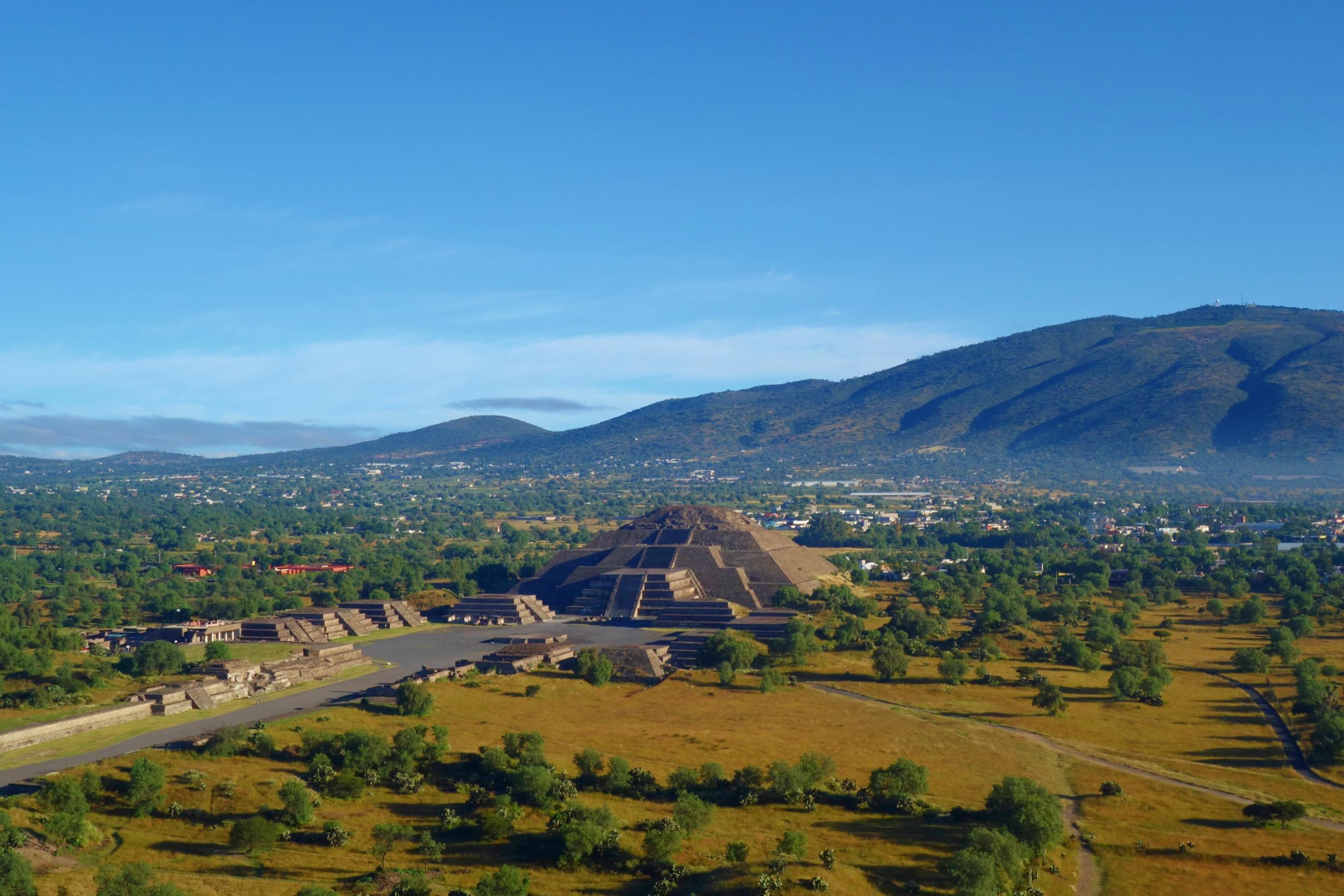
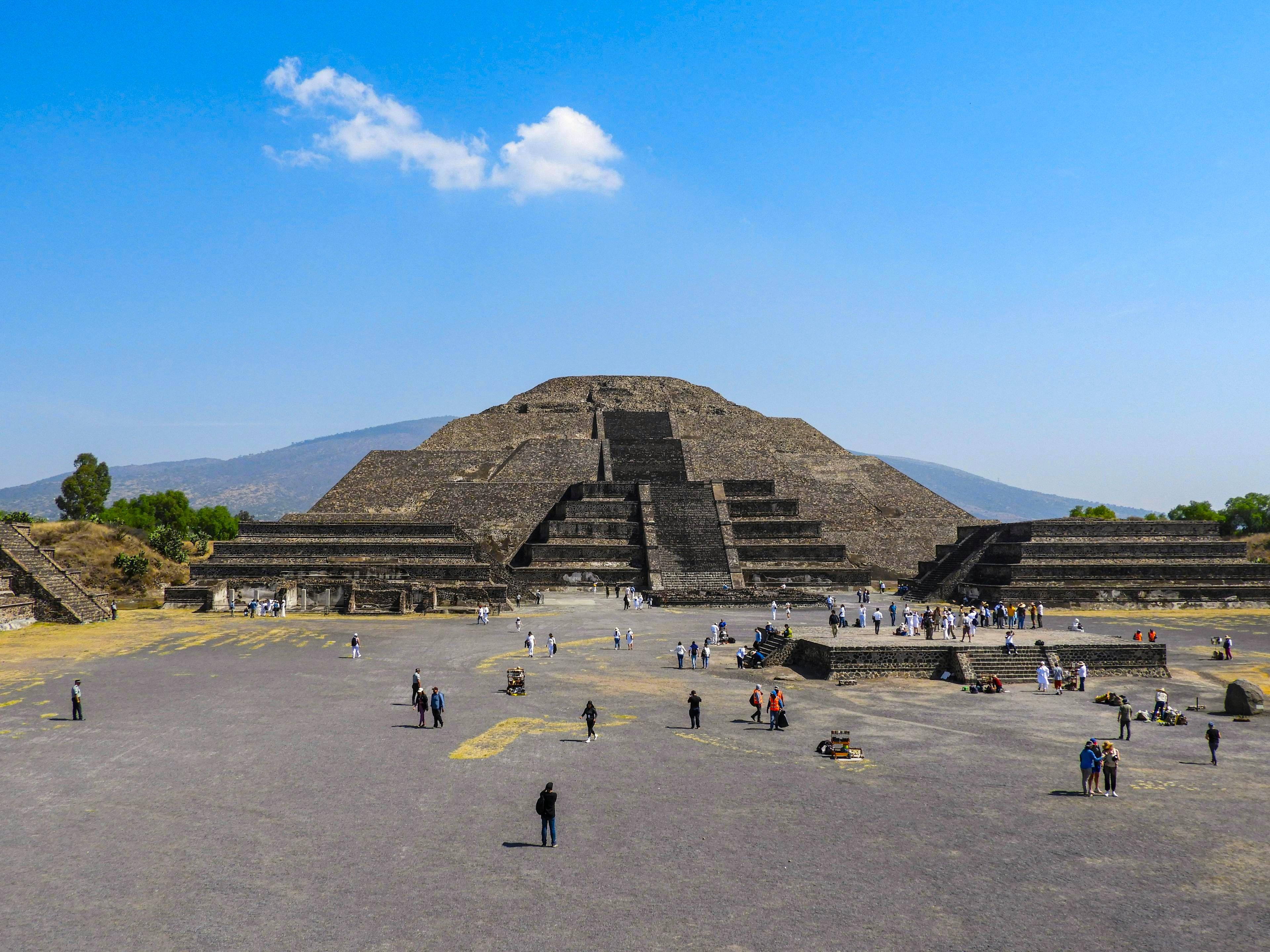
Located at the northern end of the main avenue, this platform stands against the scenic silhouette of Cerro Gordo. Archaeological excavations have revealed multiple layers of construction and burial chambers containing obsidian artifacts.
Also known as the Temple of Quetzalcoatl, this structure features stone carvings of serpent heads jutting from the facade. It serves as a key architectural landmark within the Citadel complex.
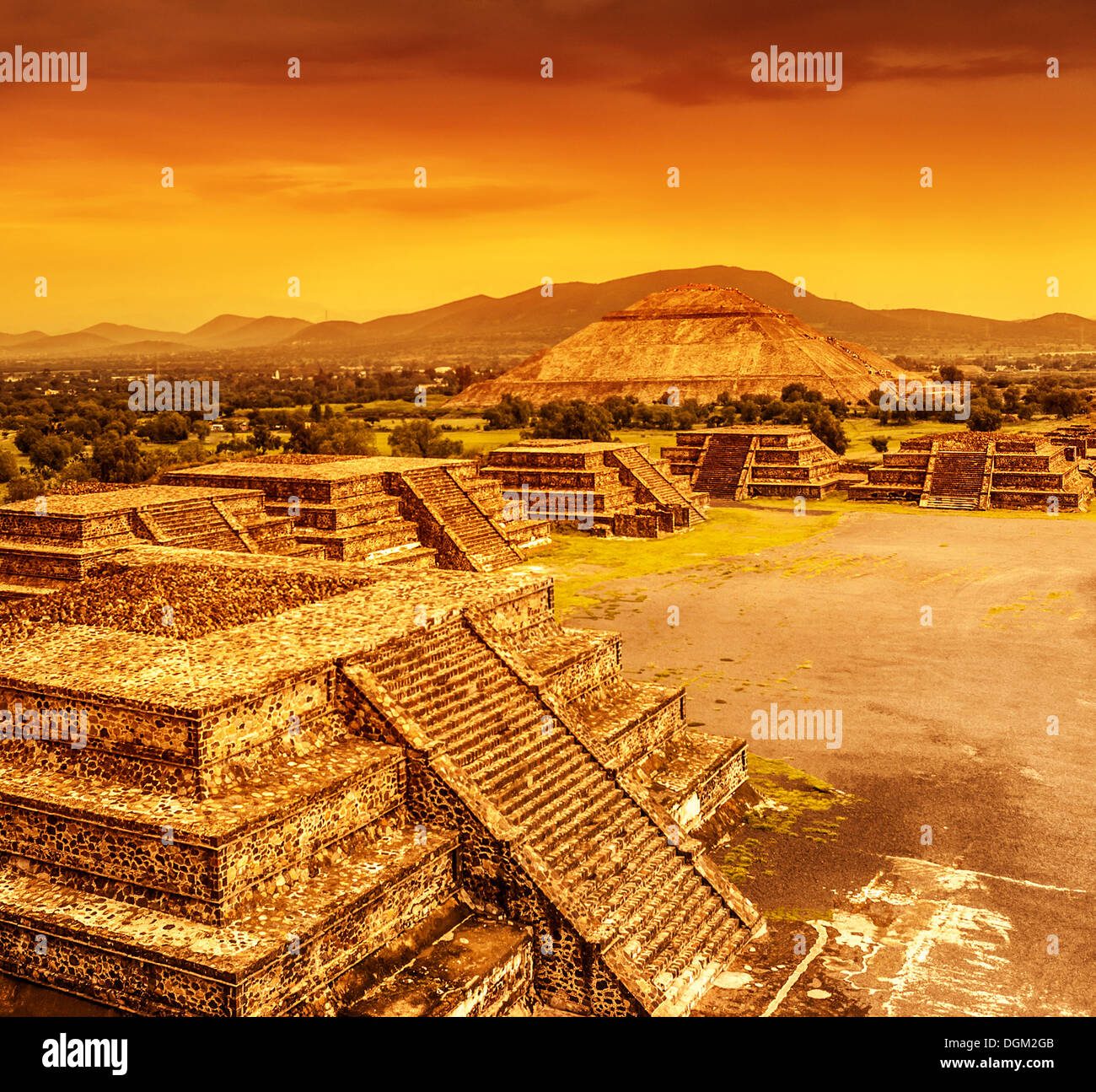
The main Mesoamerican thoroughfare stretching over 2 kilometers through the heart of the pre-Columbian city. It connects the Citadel with the northern plaza, flanked by ceremonial platforms.
A restored residential complex featuring columns carved with representations of mythological birds. The palace showcases murals and offers a glimpse into the housing of the city's ancient elite.
You pass through Gate 1 at 08:00 — the first buses from Mexico City are still loading — and the Avenue of the Dead opens ahead of you, wide enough to hold twelve lanes of traffic. The Pyramid of the Sun rises to your left: 65 metres of volcanic tepetate fill, faced in stone, with a west-facing staircase that counts 248 steps. Climb steadily rather than rushing. At the summit platform you are level with the upper third of the surrounding hills, and the full grid of the ancient city resolves below you — residential compounds, plazas, and the distant mass of the Pyramid of the Moon framed at the avenue's far end. Spend a few minutes before descending; the platform narrows at the top and crowds compress quickly after 10:00. Cross the avenue and walk north to the Pyramid of the Moon. Its staircase is shorter but steeper, and the view back down the avenue from its third-level platform shows the site's axial geometry most clearly. From there, double back along the avenue's western edge toward the Palace of Quetzalpapálotl, where sheltered courtyards protect carved stone columns and fragments of mural pigment that have survived open air for fifteen centuries. Teotihuacan from Mexico City tours that include a guide often pause here longest — the iconography rewards close reading. Plan roughly four hours on site; the Ciudadela and the Feathered Serpent Pyramid at the avenue's southern end add another forty minutes if your feet allow.
All the details about your upcoming adventure in one place
Teotihuacan from Mexico City puts one of Mesoamerica's greatest ancient urban centers within easy reach — the Pyramid of the Sun, the Pyramid of the Moon, and the Avenue of the Dead await just 50 km northeast of the capital. Booking teotihuacan from mexico city tours with a guided operator means expert commentary on the Aztec cosmology, pre-Columbian murals, and obsidian craftsmanship that define the site. Whether you secure teotihuacan from mexico city tickets in advance or join a small-group excursion, arrivals before 10 AM let you explore the ceremonial core before midday crowds gather.
At its height around 450 CE, Teotihuacan housed more than 125,000 people, making it the sixth-largest city on Earth — a scale that rivals contemporary Rome and dwarfs anything else in the pre-Columbian Americas. Planning a trip to Teotihuacan from Mexico City means confronting that scale in person: the Avenue of the Dead stretches more than two kilometres from the Pyramid of the Moon to the Ciudadela compound, lined by talud-tablero platforms whose precise stacking influenced Aztec builders seven centuries after the city's collapse. The site's builders remain anonymous. No deciphered writing system has emerged, and archaeologists still debate whether Teotihuacan was governed by a council of elites or a series of dynastic rulers. What survives, instead, is an urban grid of extraordinary rigidity — the city's main axis is deliberately offset fifteen degrees east of true north, aligning the Pyramid of the Sun with the setting of the Pleiades on two dates each year. That astronomical intention is embedded in stone: the pyramid's base perimeter nearly matches the circumference of the Great Pyramid of Giza, though the two were built independently and three thousand years apart. For visitors taking a Mexico City to Teotihuacan day trip, the site's significance extends well beyond the two famous pyramids. The Palace of Quetzalpapálotl preserves some of the Western Hemisphere's most vivid mural pigments — deep reds derived from iron oxide, greens from malachite — applied directly to lime plaster and sealed by collapse debris for over a millennium. The Pyramid of the Feathered Serpent inside the Ciudadela carries over two hundred carved serpent heads along its façade, each once painted and inlaid with obsidian eyes. Beneath it, archaeologists excavating since 2003 have found a looted burial chamber and a tunnel lined with metallic pyrite dust, still unexplained. The modern site preserves all six principal zones across a protected area of 83.15 square kilometres, designated a UNESCO World Heritage Site in 1987. Admission stands at 210 MXN for foreign visitors, and the site opens daily at 08:00. Those securing teotihuacan from mexico city tickets for the earliest entry window gain access to the Pyramid of the Sun's west-facing staircase before tour coaches arrive — roughly 248 steps to a summit platform that commands an unobstructed view across the Valley of Mexico, where the volcanic cones of Iztaccíhuatl and Popocatépetl anchor the horizon on clear mornings.
The Avenue of the Dead stretches more than two kilometres, lined by platforms whose talud-tablero design influenced Aztec builders seven centuries after the city fell silent.
When planning a trip to Teotihuacan from Mexico City, wear comfortable athletic shoes with good traction, as the terrain is unpaved and gravel-heavy. Light, breathable clothing and a wide-brimmed hat are highly recommended due to the lack of shade.
All bags are scanned at the main security gates. Small daypacks are permitted, but large luggage must be left at the storage lockers near the park entrances.
Handheld cameras and mobile phones are allowed without a fee. Tripods, drones, and professional video gear require a special permit from INAH, which must be purchased at the entrance ticket window.
Families traveling to Teotihuacan from Mexico City should bring strollers with large, sturdy wheels to navigate the main paths, though umbrella strollers will struggle on the uneven stones.
The central Avenue of the Dead has cobblestone paths and dirt surfaces that can be difficult for wheelchair users. Ramp access is available at major entry points, but assistance is highly recommended.
Visitors can bring small personal water bottles and light snacks like fruit or nuts. Large coolers, picnic spreads, and alcoholic beverages are strictly prohibited inside the archaeological zone.
Quiet morning entry
Moderate attendance
Standard crowd levels
Moderate attendance
Busy weekend attendance
Extremely busy attendance
Opening Hours
08:00–17:00
Address
Autopista Ecatepec-Pirámides km 22+600, 55800 Teotihuacán de Arista, Estado de México, Mexico
Best Arrival Window
08:00–10:00
Official Website
https://visitateotihuacan.inah.gob.mx
Entrance Fee
210 MXN
Public Bus · 1 hour 15 minutes · 120 MXN
Take the Autobuses del Norte metro line to the northern bus terminal in Mexico City. Purchase a ticket to the ruins at the Autobuses Teotihuacanos counter located near gate 8.
Taxi or Rideshare · 1 hour · 600 - 800 MXN
Order an authorized taxi or rideshare directly from your accommodation in Mexico City to the main parking area at Gate 1.
Car · 50 minutes · 150 MXN toll fee
Drive northeast on the Autopista Ecatepec-Pirámides toll road from Mexico City, following signs for Pirámides.
Cancellations for standard entrance tickets must be made at least 24 hours prior to the scheduled date for a full refund. The 210 MXN general admission fee is non-refundable if cancelled after this window.
Recommended time
3 to 4 hours (on-site duration for a teotihuacan from mexico city tour)
Securing your teotihuacan from mexico city tickets in advance helps you bypass the morning queues at Gate 1 of this ancient archaeological site. This time slot covers walking the Avenue of the Dead, exploring the Pyramid of the Sun, and seeing the Temple of Quetzalcoatl, though you should add an extra hour if you plan to visit the on-site museums. Subtract time if you only want a quick look at the main plazas, but be prepared for heavy walking across uneven terrain. Arriving during the recommended morning window allows you to beat the intense heat and experience teotihuacan from mexico city before the tour bus crowds peak.
Crowd levels through the day
Weather · crowds · average price — dots go green to amber to red as each metric rises.
Expect clear skies and cooler temperatures, with average daytime highs around 21°C. This is peak tourist season, so arranging your transport to Teotihuacan from Mexico City early is essential to avoid long queues.
Temperatures rise to around 26°C, making the dry environment quite hot. The spring equinox brings massive crowds, so visiting mid-week is highly recommended.
This is the rainy season, characterized by sunny mornings followed by afternoon downpours. Morning visits offer dry weather and greener landscapes surrounding the ruins.
Temperatures cool down, and the summer rains subside. Late October and early November see moderate crowds arriving around the Day of the Dead celebrations.
Setting off for Teotihuacan from Mexico City right at the 08:00 opening time allows you to walk the Avenue of the Dead in cooler temperatures before tour buses arrive.
This route allows a logical progression along the central axis from the Temple of Quetzalcoatl to the Pyramid of the Moon without back-tracking.
The ticket booths for the 210 MXN entrance fee accept card, but local vendors, restrooms, and drink stalls inside require cash.
The archaeological site has zero natural canopy or shade, so apply sunscreen repeatedly and carry at least one liter of water.
Step off the main avenue to visit Tetitla and Atetelco, where you can see preserved murals away from the main tour crowds.
Autopista Ecatepec-Pirámides km 22+600, 55800 Teotihuacán de Arista, Estado de México, Mexico
Located near the Citadel, this is the main arrival point for public buses from Mexico City.
Get directionsCircuito Arqueológico, 55800 Teotihuacán de Arista, Estado de México, Mexico
Situated directly in front of the Pyramid of the Sun, featuring a large parking lot and restaurants.
Get directionsAround 100 BC, settlers began raising the city that would become the largest urban center in the pre-Columbian Americas, on a semi-arid plateau roughly 50 kilometers northeast of modern Mexico City. No written records survive, so the builders remain anonymous — a collective mystery that every teotihuacan from mexico city tour eventually confronts. Construction of the Pyramid of the Sun, still one of the world's largest structures by volume, was largely complete by 100 AD, using an estimated 1.25 million cubic meters of fill, all moved without wheeled transport or draft animals. The Street of the Dead, the ceremonial spine of the city, was laid out on an axis deliberately offset 15.5 degrees east of true north, aligning the Pyramid of the Sun with the setting of the Pleiades — a calendrical decision whose full significance remains debated. At its peak between 350 and 550 AD, the city housed an estimated 100,000 to 200,000 inhabitants, making it the sixth-largest city on Earth at the time. Obsidian workshops, pottery districts, and foreign enclaves — including quarters identified as Oaxacan and Gulf Coast — point to a cosmopolitan trade network stretching across Mesoamerica. The talud-tablero architectural form pioneered here spread as far as the Maya lowlands, carried by influence, migration, and possibly military projection. Murals uncovered at Tepantitla depict a rain deity presiding over a paradise of flowing water and singing figures, offering rare glimpses into religious life. Sometime between 550 and 650 AD, the city's ceremonial core was systematically burned and smashed — evidence of internal revolt rather than foreign conquest, according to most current scholarship. Population collapsed, the urban grid was abandoned, and the site lay partially buried for centuries. When Aztec pilgrims arrived around the 14th century, they named it Teōtīhuacān, meaning "the place where the gods were created," incorporating it into their own cosmological origin myth. Teotihuacan from mexico city visitors today inherit that Aztec framing, walking avenues the Aztecs themselves walked in reverence. Modern excavations, including the 2003 discovery of the Feathered Serpent Pyramid tunnel and its sealed chambers, continue to revise understanding of this metropolis, confirming that its rulers, its fall, and its founding population are still subjects of active archaeological inquiry.

Construction of the urban grid and early temples begins on the Teotihuacan plateau.
The Pyramid of the Sun reaches near-final form, becoming one of the largest structures in the ancient world.
The city peaks at an estimated 100,000–200,000 residents and anchors a Mesoamerican-wide trade network.
The ceremonial core is deliberately burned and smashed, triggering rapid urban collapse.
Aztec pilgrims name the ruins Teōtīhuacān — "place where the gods were created" — and integrate the site into their cosmology.
Leopoldo Batres conducts the first large-scale government excavations, controversially restoring the Pyramid of the Sun.
Archaeologists discover a sealed tunnel beneath the Feathered Serpent Pyramid, revealing offerings and painted chambers.
Positioned at the northern terminus, this area offers a symmetrical view looking down the Avenue of the Dead. Photographers can capture the massive scale of the ancient structures framing the pathway. Visitors planning teotihuacan from mexico city tours often start here for early morning reflections.
Looking up from the eastern edge of the Plaza of the Sun reveals the staggering height of this UNESCO heritage site. Frame the shot with local flora like cacti to contrast organic shapes against the geometric stone steps. Booking teotihuacan from mexico city tickets in advance helps secure early entry to capture this monument without crowds.
This enclosed patio features intricately carved stone pillars depicting mythological birds and butterflies. The play of light and shadow in the porticoes brings out the deep relief details of the Mesoamerican designs. This is a popular stop on a standard teotihuacan from mexico city tour.
Located inside the Ciudadela at the southern end, this monument features carved stone serpent heads projecting from the facade. Stand slightly off-center to catch the three-dimensional reliefs highlighted by angled sunlight. Traveling to teotihuacan from mexico city offers a chance to photograph these exceptionally preserved carvings.
Visitors planning a trip to teotihuacan from mexico city will find several dining spots situated just outside the archaeological gates. The surrounding area features a rich culinary landscape highlighting pre-Hispanic ingredients like escamoles, pulque, and local cactus dishes. Securing your teotihuacan from mexico city tickets early ensures a smooth transition from exploring the ruins to enjoying these traditional meals at nearby venues.
Located near Gate 5, this restaurant is set inside a natural volcanic cave. It serves traditional Mesoamerican dishes like slow-roasted barbacoa and wild mushrooms. Many teotihuacan from mexico city tours stop here to experience its unique atmosphere and live folk dances.
Situated between Gates 4 and 5, this open-air venue is ideal for a post-walk meal. They specialize in mutton mixiote, fresh nopales salad, and creative pulque cocktails. It is a popular rest stop during a busy teotihuacan from mexico city tour.
Located on the main access highway, this spacious venue offers a comprehensive regional buffet alongside thematic pre-Hispanic décor. The kitchen serves specialties like squash blossom-stuffed chicken breast, chinicuiles, and fresh handmade tortillas. It is highly accommodating for larger groups and families looking for diverse dining options.
Real experiences from real travelers
Doing teotihuacan from mexico city as a day trip, I had underestimated just how physically demanding the site is in July heat. Arriving by early morning bus kept us ahead of the largest crowds and gave us soft light on the pyramids. The Pyramid of the Sun is genuinely massive up close in a way that no photograph prepares you for. Bring far more water than you think you need.
We booked teotihuacan from mexico city tour through a small local operator who took us through the Ciudadela before the main gates opened to general crowds. The feathered serpent carvings on the Temple of Quetzalcoatl were the highlight, intricate and well-preserved. The site stretches over eight square miles so comfortable shoes matter enormously. Our guide explained the talud-tablero construction style in a way that made the whole complex feel much more comprehensible.
The ancient pre-Columbian city is often described using numbers — 83,000 residents at its peak — but standing on the Pyramid of the Moon summit and looking south down the ceremonial avenue puts those figures into perspective physically. We combined teotihuacan from mexico city tickets purchased online with a private driver which simplified logistics considerably. The obsidian vendors outside the main gate sell high-quality work.
Teotihuacan from mexico city is straightforward on the suburban bus from Terminal Central del Norte, but we arrived around 11am and the site was extremely busy by then. The Pyramid of the Sun climb was queued. The archaeological zone itself is genuinely impressive — the alignment of the structures with astronomical events is something the on-site signage explains well. I would strongly recommend an earlier start than we managed.
Walking the Avenue of the Dead from the Ciudadela to the Pyramid of the Moon, you feel the spatial logic of a UNESCO World Heritage city designed to impress. Teotihuacan from mexico city tours that include a knowledgeable guide add real depth — our guide identified building phases and murals that we would have walked past. The mica floor inside one of the palace complexes is an unexpected detail worth finding.
Having grown up in Mexico City I had somehow never visited the ancient city until this February. The morning light on the stone surfaces at the base of the Pyramid of the Sun has a quality you only get in the dry season. The extent of the sacbe road network visible from height gives you a sense of just how planned this pre-Columbian metropolis was. Teotihuacan from mexico city by organized group tour is comfortable, but the site rewards slower independent exploration.
We did this mexico city pyramids excursion on a weekday in December and had large sections of the site almost to ourselves. The Pyramid of the Moon staircase was open with no queue. Views from the summit toward the Valley of Mexico in the cool dry air were extraordinary in clarity. The on-site Museo de Sitio provides strong context on the Teotihuacan civilization before you walk the monuments.
Most accounts of teotihuacan from mexico city focus on the pyramids, but the Palace of Quetzalpapalotl murals and the Tepantitla compound frescoes are what I found most affecting. The pigment in some panels has survived over fifteen centuries. The site map provided at the main entrance is essential — the complex is large enough that without it you can miss entire sections.
Visiting the ancient ceremonial center at the height of summer means direct sun on stone surfaces with very little shade. We did teotihuacan from mexico city tickets booked in advance and entered at opening time, which made the first two hours genuinely comfortable. The site audio guide available at the entrance is decent but a live guide adds considerably more to the obsidian trade routes and astronomical alignment questions.
Nothing in European archaeology quite prepares you for the sheer volume of the Pyramid of the Sun — the third largest pyramid on the planet by volume. We took the direct coach from Mexico City's northern bus terminal and arrived well before the tour groups. The Avenue of the Dead in early morning light, with mist still sitting in the valley, is something I think about regularly since returning home.
Everything you need to know for your journey
The site is open daily from 08:00 to 17:00, including holidays. We recommend starting your trip to Teotihuacan early in the morning to beat the midday sun.
Yes, tickets can be purchased in advance via the official site for 210 MXN. Buying beforehand helps you bypass the main ticket office queues upon arrival.
There is no strict dress code, but comfortable walking shoes and sun protection are essential when visiting Teotihuacan. The paths are dusty and uneven.
Yes, small storage lockers are available at the main gates of the Teotihuacán archaeological site. Large luggage should be left at your hotel in the city.
You may bring small water bottles and light snacks into Teotihuacan. Large coolers, picnic baskets, and alcohol are prohibited by security.
Handheld cameras and mobile phones are permitted for personal photography at Teotihuacan. If you plan to use professional gear or tripods, you must pay a fee at the entrance.
Public buses leave regularly from Autobuses del Norte station in Mexico City to the ruins. Alternatively, renting a car or booking a guided excursion provides direct transit.
The dry season from October to May is the most pleasant time to visit the Teotihuacan ruins. The weather is dry and mild, though early morning visits are always best.
Standard admission tickets to Teotihuacan are generally non-refundable once purchased. Private tour operators may offer free cancellation up to 24 hours prior.
Yes, the open spaces are suitable for families, though strollers can be difficult to push on the gravel paths. Keep children close as there are many uneven stones.
This onsite museum houses thousands of excavated artifacts, including pottery, obsidian blades, and burials found during archaeological digs.
Located near Gate 3, this gallery showcases restored frescoes and architectural murals detailing daily life in the ancient Mesoamerican city.
A safari-style theme park located nearby, featuring interactive animal exhibits, horseback riding, and family activities.
A fortress-like 16th-century Augustinian monastery featuring Plateresque architecture and early colonial murals.
A hotel located adjacent to the archaeological zone featuring colonial-style architecture, an outdoor pool, and garden views.
Comfortable rooms with Mexican decor, located a short walk from Gate 2, offering an outdoor pool and onsite dining.
A nearby town offering budget-friendly guesthouses, local markets, and bed-and-breakfast options for overnight visitors.
Join thousands of happy travelers who have discovered this incredible experience
Book Your Experience Now